Most reusable silicone wrinkle patches are rated for 15 to 30 uses. Where you land in that range, or below it, comes down almost entirely to care, not the patch itself.
What determines lifespan
- Cleaning consistency. Rinsing after every wear prevents oil and residue buildup, which is the leading cause of early adhesion loss.
- Drying method. Air-drying adhesive-side up keeps the surface clean; towel-drying introduces lint that never fully comes off.
- Storage environment. Humid bathrooms and open counters expose patches to moisture and dust between wears, both of which degrade adhesive faster than normal wear does.
- Handling. Repeatedly sticking a patch back onto its packaging sheet creates friction that wears down the adhesive layer over time.
Realistic expectations
With consistent care, most users get into the 15 to 30 use range manufacturers advertise. Without it, adhesion loss after 3 to 5 uses is common, not because the patch failed, but because the surface picked up more contamination than it could recover from.
Signs it's time to replace, not clean
If a patch no longer grips after a thorough rinse and full dry, or if the silicone has visibly thinned, torn, or lost its shape, that's genuine end-of-life, not a care issue. At that point, replacing it is the right call.
Watch the routine in action
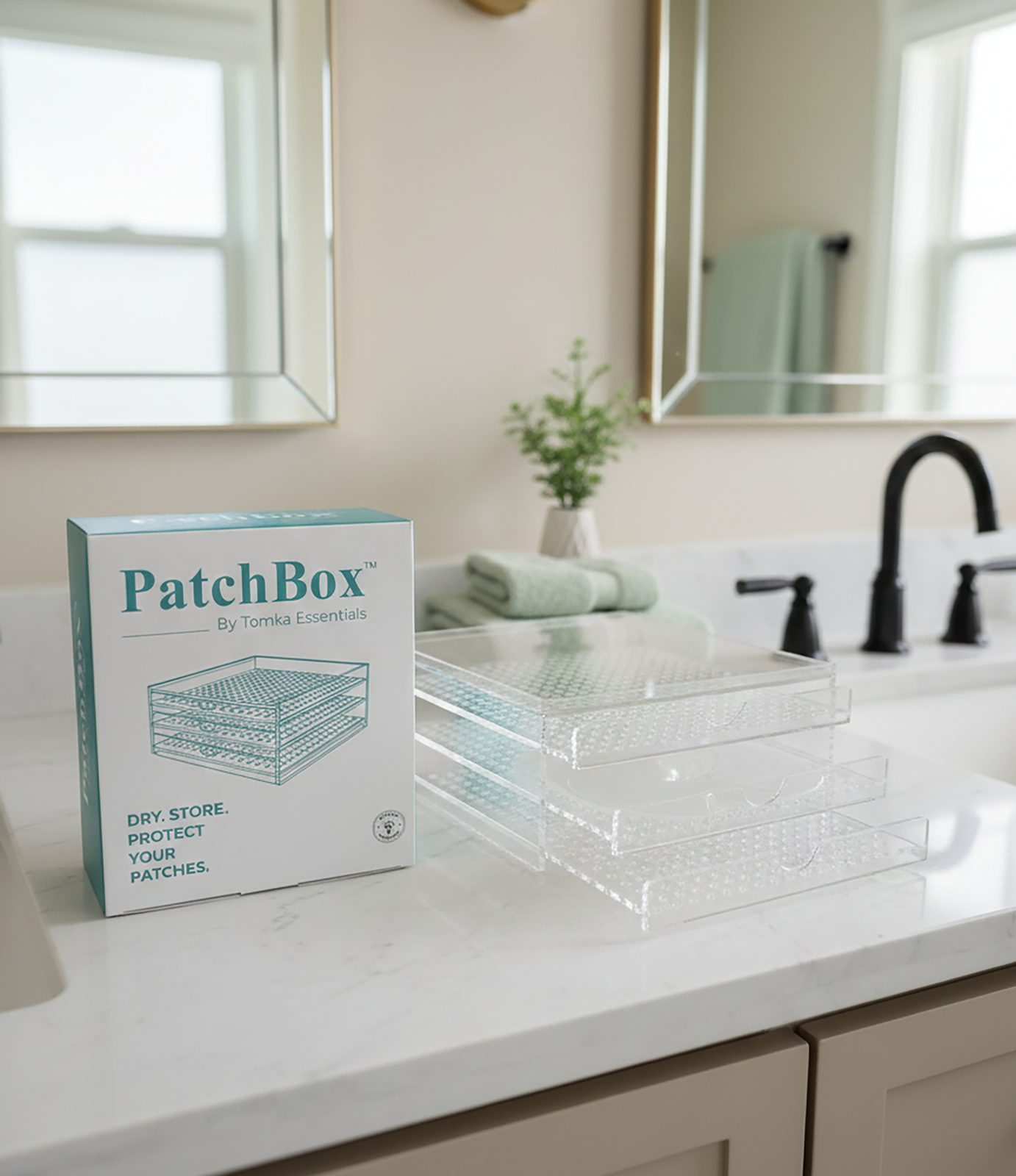
Getting the full lifespan out of a set is really a care problem, not a durability problem. The video above shows the exact rinse-dry-store routine using the PatchBox™, which gives patches a ventilated space to dry and a clean, enclosed spot to live between wears, so hitting the top end of that 15 to 30 use range is the default outcome, not the exception.
Give your patches a home
The PatchBox™ is the patent-pending drying rack and dust-proof case that keeps reusable patches sticky, clean, and front and center — so they actually get used.
Get the PatchBox™