If your reusable silicone patches lost their stick after a few uses, the patch isn't defective — the adhesive picked up oil, dust, or moisture faster than it should have.
What actually kills adhesion
- Facial oils and skincare residue. Every wear transfers a thin layer of oil onto the adhesive side. Left uncleaned, it builds up and blocks the silicone from gripping skin.
- Drying on a towel. Fabric fibers bond to the adhesive permanently. Once a patch is linty, no amount of rinsing fully restores it.
- Humid storage. Bathrooms are the most common place people keep their patches, and also the worst — ambient moisture slowly breaks down stickiness over time.
- Open-air dust exposure. A patch left uncovered on a counter collects airborne particles between every wear.
The fix is cleaning and storage, not a new patch
Most manufacturers note that adhesion loss is largely reversible: rinse the patch with water (no soap, which can leave its own residue), let it air-dry adhesive-side up somewhere free of dust, and store it somewhere enclosed and dry between uses.
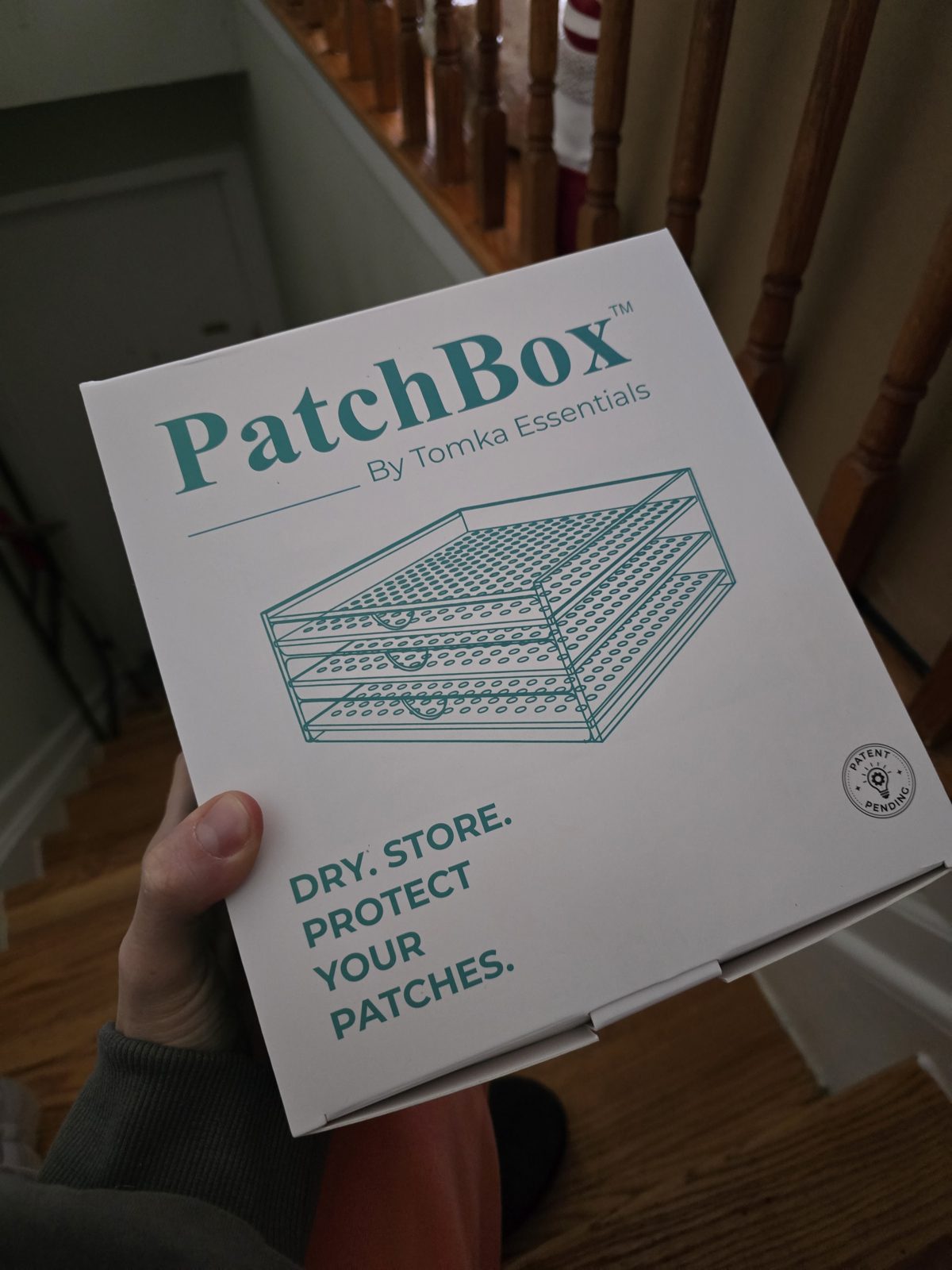
This is exactly the gap the PatchBox™ was built to close — a dedicated drying rack and dust-proof case so your patches get proper care automatically instead of by luck.
Give your patches a home
The PatchBox™ is the patent-pending drying rack and dust-proof case that keeps reusable patches sticky, clean, and front and center — so they actually get used.
Get the PatchBox™